Decluttering sentimental items from your kids is one of the hardest parts of simplifying your home.
It’s not the stuff.
It’s the memories.
The dolls. The baby blankets. The tiny shoes. The birthday gifts they begged for.
When your kids outgrow their toys, you aren’t just decluttering plastic. You’re facing the reality that a season is ending.
And that’s emotional.
My story with decluttering my kids’ toys
We recently decluttered my girls’ dolls. These were THE set of toys. They were the birthday ask, the Christmas ask, and the toy they bought with their own money… along with sooooo many accessories to go with them.
I didn’t want to declutter their dolls. I went to the consignment store kicking and screaming – well, not really, but I did have some tears.
You see, my kids came to me. They wanted rooms that reflected their soon to be teen selves, and dolls didn’t have a place in their new spaces.
My gut response was, “Are you sure?”
Oh gosh, they actually came to me to help them declutter, don’t get in the way!!!! Let them do this.
Easier said than done.

Why Decluttering Sentimental Kids’ Items Feels So Hard
Sentimental clutter is different from everyday clutter.
When you declutter expired pantry food, you don’t cry in the driveway.
But when you’re letting go of kids’ baby items or toys they once loved? That’s layered.
There’s:
- Money spent
- Time invested
- Memories attached
- A version of your child that no longer exists
Often, we aren’t holding onto the item. We’re holding onto the season.
That’s normal. Normal doesn’t mean we keep everything.
When Kids Outgrow Toys: A Natural Transition
If your kids are transitioning from little kid to tween or teen, they need space that reflects who they are becoming.
Bigger beds. Desks. Reading chairs. Sports equipment. Hobbies that require room.
Decluttering kids’ rooms for teens isn’t about stripping their childhood away. It’s about making room for what’s next.
How to declutter sentimental items from your kids (Step-by-Step)
Here’s a practical way to approach it:
1. Let your kids lead (when age-appropriate)
If your children come to you wanting to declutter, don’t panic.
Take a breath.
Ask: “Are you sure?”
Then, respect their answer.
When kids choose to let go, the process is healthier for everyone.
My girls once came to me wanting to declutter their Cabbage Patch kids. This hurt me, as we spent way too much on these dolls, and for me, the memory of getting them was special. (In reality, I always wanted one as a kid for actual Babyland, and that’s where these came from.)
At the time, I didn’t let my kids get rid of the dolls. They stayed there in their rooms for at least a year afterwards, never played with again. I should have just let them go!!
2. Separate the Memory from the Object
Ask yourself: “Do I love this item?”
Or, “Do I love the memory attached to it?”
You can keep the memory without keeping the entire bin of accessories.
Consider:
- Taking photos of special toys
- Keeping one meaningful item instead of the whole collection
- Saving one outfit instead of an entire wardrobe
Decluttering sentimental items doesn’t mean erasing the past. It means curating it.
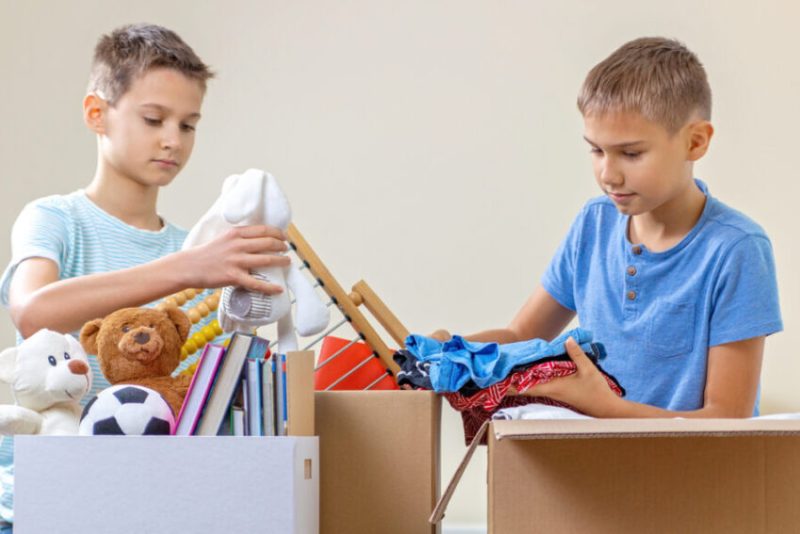
When my girls were ready to sell their dolls, they had about 12 between the two of them. They each picked their favorite to save. (This was their idea, and I think it was brilliant!)

3. Let it sit (if you need to)
If you are scared to let go of your child’s sentimental items, consider a holding period.
Put the items in a labeled bin.
Set a timeline: 3 to 6 months should be more than enough time.
If no one asks for them and no one misses them, that tells you something.
You’re not weak for needing time. You’re human. You’re a parent who loves their child and who isn’t quite ready to let go. That’s OK.
4. Consider the value of your kids’ old toys
Before donating, ask: “Can we sell used kids’ toys?”
Donating is always faster, but sometimes, selling your clutter can pay off!
What condition are the toys/items in? If in pretty good, gently used condition, you have options.
My girls recently sold all of their dolls and accessories for $154 on Facebook Marketplace and through a local consignment shop. They were THRILLED!!
When you help kids sell their clutter (and yes, it will take effort on your part), it teaches kids that their things have value; that it will take effort to prepare the items for sale; and that clutter can become an opportunity.
Let’s be honest… a little cash softens the emotional blow.

What to do with old kids’ toys you’re not ready to toss
If you truly can’t let go yet:
- Create a small “memory bin” per child.
- Limit yourself to one container.
- Choose only the items that truly make your heart pause.
Boundaries create freedom. Without limits, sentimental clutter quietly takes over closets, basements, and garages.
It’s Not About the Stuff
When you’re decluttering sentimental items from your kids, the tears usually aren’t about the item itself.
They’re about the baby smell, the toddler snuggles, the imaginative play, and the seasons that passed too quickly.
You don’t want the toys back.
You want time back. That’s something no storage bin can hold.
Final Encouragement
If you are facing intense emotions while decluttering kids’ toys or baby items, you are not alone.
Remember, clutter is still clutter. Even sentimental clutter.
It has served its purpose. Now it may be taking up space that your growing child needs.
Let the season close with gratitude. Make space for what’s next.
Know this: you aren’t throwing away childhood. You’re honoring it and moving forward.
 Most People Declutter These First. That’s the Problem.